
Hot Water Heat Pumps – Complete Buyer’s Guide & Brand Comparison
Heat pump hot water systems are quickly becoming one of the most popular ways to heat water in Australian homes.
They’re quiet, energy-efficient, environmentally friendly and can dramatically reduce running costs compared to traditional electric systems.
But with so many brands, tank types and specifications available, choosing the right system can feel confusing.
This guide explains how hot water heat pumps work, what to look for, and how the leading brands compare, so you can make an informed decision.
Need installation in Adelaide? Visit our Heat Pump Installation page or call (08) 8444 7320 for expert advice.
What Is a Hot Water Heat Pump?
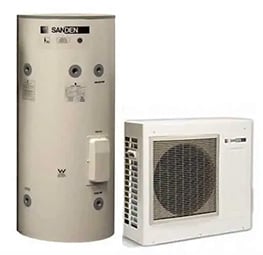
A heat pump is an energy-efficient hot water system that works like a reverse air conditioner.
Instead of creating heat directly, it:
-
Draws warmth from the surrounding air
-
Compresses the heat
-
Transfers it into your water tank
Because it moves heat rather than generating it, a heat pump can produce 3-5 times more heat energy than the electricity it uses.
This makes it significantly cheaper to run than conventional electric hot water systems.
Why Are Heat Pumps So Popular?
Key benefits
✔ Lower electricity bills
✔ Reduced energy use
✔ Environmentally friendly
✔ Quiet operation
✔ Long lifespan
✔ Eligible for government rebates
✔ Works day and night (not dependent on sunshine)
For many households, energy savings alone can offset the higher upfront cost over time.
Types of Heat Pump Systems
All-in-one units
The tank and heat pump are combined into one unit.
-
Simple installation
-
Compact footprint
-
Common for residential homes
Split systems
Tank and heat pump are separate.
-
Flexible placement
-
Quieter indoors
-
Often higher performance
Both types are reliable – the best option depends on space and layout.
What To Look For When Comparing Heat Pumps
Not all systems are built the same. Here are the most important factors to compare:
Efficiency (COP)
The higher the COP (Coefficient of Performance), the more heat you get per unit of electricity.
Higher COP = lower running costs.
Tank material
-
Stainless steel → low maintenance, corrosion resistant
-
Enamel lined steel → requires anode replacement over time
Warranty
Longer tank warranties usually indicate higher build quality.
Noise level
Most modern systems operate between 37-48 decibels (about the level of a quiet fridge).
Operating range
Important for cooler climates. Some systems operate down to 10°C.
Maintenance
Some systems require periodic anode replacement or servicing.
Stainless Steel vs Enamel Tanks
This is one of the biggest differences between systems.
Stainless steel
✔ No anode maintenance
✔ Excellent corrosion resistance
✔ Longer lifespan
Enamel lined steel
✔ Lower upfront cost
✖ Requires anode replacement
✖ More maintenance long term
Heat Pump vs Gas vs Electric
If you’re still deciding which system type is right for you:
| System | Upfront Cost | Running Cost | Best For |
|---|---|---|---|
| Heat Pump | Medium–High | Very Low | Long-term savings |
| Gas | Medium | Low | Reliable performance |
| Electric | Low | High | Budget installs |
Heat pumps generally provide the best long-term efficiency.
For professional advice or installation options, visit our Heat Pump Installation Adelaide page.
When Does a Heat Pump Make Sense?
Heat pumps are ideal if you:
✔ Want to reduce electricity bills
✔ Plan to stay in your home long term
✔ Want a lower environmental impact
✔ Have space for outdoor airflow
✔ Qualify for rebates
They may be less suitable if you need the absolute lowest upfront cost.
Adelaide Climate & Performance
Adelaide’s mild climate makes it particularly well suited to heat pump technology.
With moderate winter temperatures and plenty of ambient warmth in the air, heat pumps operate efficiently year-round.
This helps maximise energy savings compared to colder regions.
For Adelaide installation pricing and rebates, see our Heat Pump Installation Adelaide page.
Comparing Warranty and Tank Types
To start our comparison, let’s take a look at the warranty and tank types offered by some of the top heat pump hot water system brands in Australia.
1. Sanden
Sanden – 10-year parts and Labor on the tank and an additional 5 years pro-rata warranty, Sanden offers a total warranty of 15 years on their Tank. The compressor is covered by 6-year parts and Labor.
2. Reclaim
Reclaim – 10 year parts and 2 year Labor on the tank, with a 6 year parts and 2 year Labor on the compressor.
3. Quantum
Quantum – 5-year parts and 2 year Labor on tank.
4. Rheem
Rheem – 7-year parts and 3 year Labor on tank.
5. Steibel Eltron
Steibel Eltron – 5-year parts and 2 year Labor on tank.
6. Evo Heat
Evo Heat – 5-year parts and 2 year Labor on tank.
7. Media
Media – 5 year parts and 2 year Labor on tank.
8. Rinnai
Rinnai – 5 year parts and 2 year Labor on tank.
9. Apricus
Apricus – 5-year parts and 2 year Labor on tank.
As for tank types, Sanden uses stainless steel tanks, while the rest of the brands mentioned above use mild steel tanks with a vitreous enamel lining requiring on going maintenance and servicing costs to maintain the warranty
Efficiency and Location of Heat Pump Manufacture
Efficiency is an essential factor when choosing a heat pump hot water system. Here’s a comparison of the efficiency levels and the location of manufacture for the brands we mentioned:
- Sanden – Sanden boasts an impressive 82% efficiency.
- Reclaim – Reclaim provides 80% efficiency.
- Quantum – Quantum provides 65% efficiency.
- Rheem – Rheem offers 65% efficiency.
- Steibel Eltron – Steibel Eltron provides 60% efficiency.
- Evo Heat – Evo Heat also offers 60% efficiency.
- Media – Media provides 60% efficiency.
- Rinnai – Rinnai offers 60% efficiency.
- Apricus – Apricus also provides 60% efficiency.
Location of manufacture
As for the location of manufacture, Sanden and Reclaim’s tanks are made in Australia, while the heat pumps themselves are made in Japan. Quantum, Steibel Eltron, Evo Heat, Media, and Rinnai source their tanks and heat pumps from China. Rheem’s tanks and heat pumps are manufactured in Australia, and Apricus sources its products from China.
Compare Heat Pumps
| Manufacturer | Sanden | Chromagen | Bosch | Rheem | Dux |
|---|---|---|---|---|---|
| Reliability |  |  |  |  |  |
| Efficency | | | | | |
| Value for money | | | | | |
| Quietness | | | | | |
| After sales | | | | | |
| Ease of use | | | | | |
| Capacity Litres | 315 | 280 | 270 | 325 | 250 |
| Manufacturer Location | Australia -Japan | China | China | Australia | Australia |
| Tank Warranty | 15 years | 5 years | 5 years | 5 years | 5 years |
| H/P Compressor | 6 Years | 3 years | 2 years | 2 years | 2 years |
| Tank Type | 316 Stainless Steel | Mild steel with enamel glazing | Mild steel with enamel glazing | Mild steel with enamel glazing | Mild steel with enamel glazing |
| Noise Level | 37db | 48db | 43db | Not Available | 51 db |
| STC Rebate Value x $rate | 33 | 28 | 27 | 27 | 26 |
| Connect to off Peak | YES | NO | YES | NO | NO |
| Back up element | Not necessary | YES when below 5c | YES as backup | YES when below 5c | YES |
| Boost capacity | 315 Litres all the time | 100 Litres | 100 Litres | 180 Litres | 100 Litres |
| Refrigerant | R744 (CO2) | R134a | R134 | R134 | R134 |
| COP | 5+ | 3 | 3 | 3 | 3 |
| Heat Pump Operating | -10 to +43°C | +5 to +43°C | +3 to +40°C | +5 to +45°C | +5 to +45°C |
| Energy Savings | 80% | 60% | 60% | 65% | 60% |
| Heat Input Heat Pump | .84 KW | .78 kw | .6 Kw | .8Kw | 1.2 Kw |
| Heat Input element | Non - Not required | 1.5 Kw - 3 Kw | 1.5 Kw | 3.6 Kw | 3 Kw |
| Anode Replacement | Non - Not required | Yes, every 2-3 years | Yes, every 2-3 years | Yes, every 2-3 years | Yes, every 2-3 years |
| Programable | YES | YES | YES | NO | NO |
Conclusion
Sanden heat pumps Sanden is popular for stainless tanks and long warranties, but the best choice depends on budget, noise, placement, and warranty terms at time of purchase.
Energy Saving Tips for Your Heat Pump Hot Water System
To get the most from your heat pump hot water in Adelaide, consider these tips:
- Keep the water temperature at an effective and pleasant level (it should be around 60°C).
- Insulation on your hot water pipes will decrease the heat that is lost.
- Pick an off-peak tariff for electricity to cut down your bills.
- Keep up with regular maintenance to help your system run well and live longer.
Heat Pump Hot Water and Other Hot Water Systems
While heat pumps offer great energy savings, you might also consider other options for your home:
Gas Hot Water
Gas hot systems provide quick heating and can be cost-effective if natural gas is available.
Electric Hot Water
These electric hot water systems are easy to install but generally use more energy than heat pumps.
Solar Hot Water
Solar systems use the sun’s energy and can be combined with heat pumps for maximum savings.
Bosch Hot Water
We also offer reliable Bosch hot water systems for efficient and long-lasting performance.
Frequently Asked Questions
How much can I save with a heat pump hot water system?
You can save up to 80% on your water heating energy costs compared to traditional electric heaters, depending on usage and system size.
Do heat pump hot water systems work well in hot weather?
If you live in an area with a consistently warm climate throughout the year, a heat pump will function effectively and produce ample heat for your hot water needs. The ambient temperature plays a significant role in the performance of a heat pump water heater. Heat pumps are more effective the warmer the ambient air temp.
How noisy is a heat pump hot water system?
Most modern heat pumps operate quietly, with noise levels around 37 to 48 decibels, similar to a quiet refrigerator.
Can I get government rebates for installing a heat pump?
Yes, rebates may be available for installing energy-efficient heat pump hot water systems. Check with your local government or energy provider.