
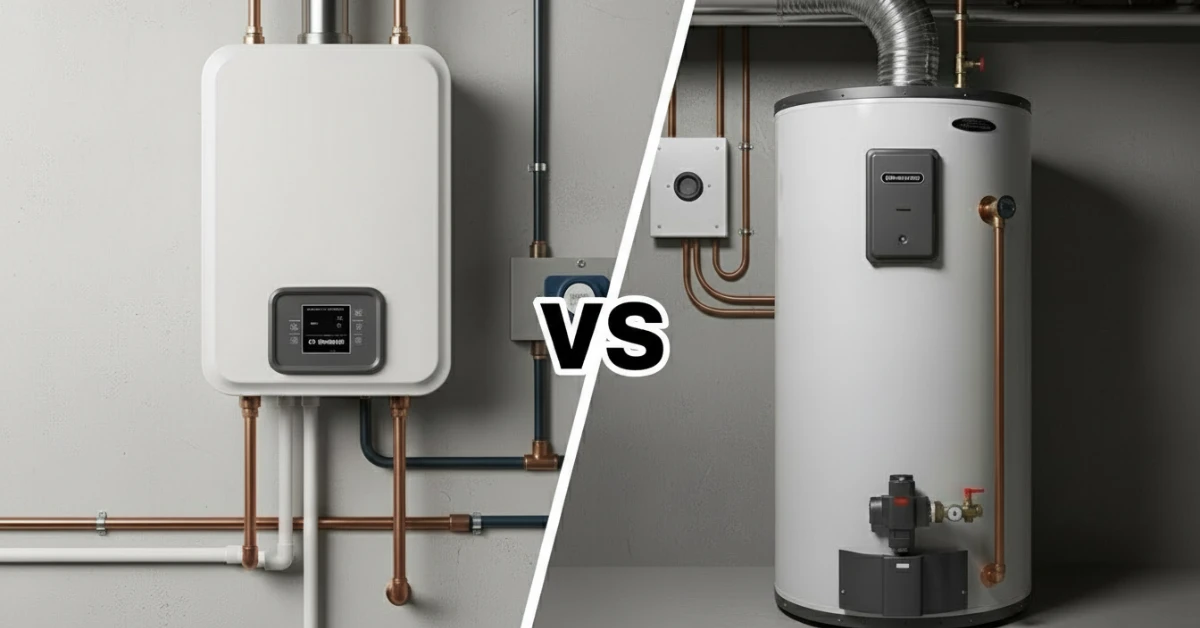
Tankless water heaters provide endless hot water, high energy efficiency, and space-saving installation, but they come with a higher upfront cost and more complex installation requirements. Tank water heaters, on the other hand, are less expensive to purchase and install, are simpler to operate, and can still supply hot water during power outages, but they consume more energy, occupy more space, and offer a limited hot water supply. Choosing between a tankless and a tank water heater depends largely on your budget, household hot water demand, especially simultaneous usage, and available installation space.
Understanding Tankless Water Heaters
Tankless water heaters, also known as on-demand systems, heat water only when a hot water tap is turned on. Instead of storing heated water in a tank, they use powerful heating elements or gas burners to instantly heat water as it flows through the unit, eliminating standby heat loss.
Advantages of Tankless Water Heaters
Endless Hot Water Supply
Because water is heated on demand, tankless systems do not run out of hot water. This makes them ideal for households with extended shower usage or inconsistent hot water demand.
Higher Energy Efficiency
According to the U.S. Department of Energy, tankless water heaters are 24–34% more energy efficient in homes with low to moderate hot water usage, as they avoid the constant reheating associated with storage tanks.
Space-Saving Installation
Tankless units are compact and often wall-mounted, making them suitable for homes with limited utility space, apartments, or condos.
Longer System Lifespan
A properly maintained tankless water heater can last 20 years or more, significantly longer than traditional tank systems.
Disadvantages of Tankless Water Heaters
Higher Initial Cost
Tankless systems cost more upfront, including both the unit price and installation expenses.
Complex Installation Requirements
Many homes require electrical panel upgrades, higher-capacity gas lines, or ventilation modifications, increasing overall installation complexity.
Flow Rate Limitations
While tankless heaters provide continuous hot water, they may struggle to supply multiple fixtures simultaneously, such as running two showers and a dishwasher at the same time, unless multiple units are installed.
Power Dependency
Tankless systems rely on electricity or gas to operate. During a power outage, hot water is unavailable unless a backup power source is in place.
Ongoing Maintenance Needs
Annual flushing is recommended to prevent mineral scale buildup, particularly in areas with hard water.
Understanding Tank Water Heaters
Tank water heaters store and heat a set amount of water, typically 30 to 80 gallons, in an insulated tank. Once the stored hot water is used, the system must reheat a new supply before more hot water becomes available.
Advantages of Tank Water Heaters
Lower Purchase and Installation Cost
Tank water heaters are generally more affordable to buy and install, making them a popular option for budget-conscious homeowners.
Strong Performance for Simultaneous Use
Because hot water is pre-stored, tank systems can handle multiple hot water demands at once more effectively than single tankless units.
Hot Water Availability During Power Outages
Gas-powered tank heaters can still provide stored hot water even during power outages, a key advantage in areas prone to electrical disruptions.
Simple Operation and Repairs
Tank systems use straightforward technology, making them easier and less expensive to repair or replace.
Disadvantages of Tank Water Heaters
Limited Hot Water Supply
Once the stored hot water is depleted, users must wait for the tank to reheat, which can be inconvenient during high usage periods.
Higher Energy Consumption
Tank heaters continuously maintain water temperature, leading to standby heat loss and higher energy usage.
Shorter Lifespan
Most tank water heaters last 10 to 15 years, requiring more frequent replacements compared to tankless systems.
Larger Space Requirements
Tank systems occupy significant floor space and are often installed in garages, basements, or utility rooms.
Tankless vs Tank Water Heater Comparison
| Feature | Tankless Water Heater | Tank Water Heater |
| Hot Water Delivery | On-demand, continuous | Stored, limited |
| Energy Efficiency | 24–34% higher (low usage homes) | Lower due to standby loss |
| Initial Cost | Higher | Lower |
| Installation Complexity | High | Low |
| Lifespan | 20+ years | 10–15 years |
| Space Required | Minimal | Significant |
| Simultaneous Use | Limited by the flow rate | Strong |
| Power Outage Performance | No hot water | Stored hot water is available |
| Maintenance | Annual flushing | Minimal |
Installation and Maintenance Considerations
Tankless water heaters often require professional installation due to electrical, gas, and ventilation upgrades. Tank systems, by contrast, are simpler to install and generally require less frequent maintenance.
Energy Efficiency and Long-Term Cost Analysis
Although tankless water heaters involve higher upfront costs, their improved efficiency and longer lifespan can result in lower long-term operating costs. Tank water heaters remain more economical initially, but may lead to higher utility expenses over time.
Which Water Heater Is the Best Choice for Your Home?
When a Tankless Water Heater Makes Sense
Tankless systems are best suited for homeowners who value energy efficiency, want unlimited hot water, have limited space, and are willing to invest in higher upfront costs for long-term savings.
When a Tank Water Heater Is the Better Option
Tank water heaters are ideal for households with high simultaneous water demand, limited budgets, frequent power outages, or a preference for simple and proven technology.
Final Verdict
Both tankless and tank water heaters offer distinct advantages and limitations. Tankless water heaters excel in efficiency, longevity, and space savings, while tank water heaters remain a cost-effective and reliable solution for many households. The best choice ultimately depends on your household size, hot water usage patterns, available space, and budget priorities.
Frequently Asked Questions
Are tankless water heaters worth the extra cost?
Tankless water heaters are worth the cost for homeowners seeking long-term energy savings, endless hot water, and a longer lifespan. Although installation is more expensive, reduced utility bills and durability can offset the initial investment.
Do tankless water heaters really provide endless hot water?
Tankless water heaters supply continuous hot water on demand, but performance depends on flow rate. Multiple fixtures running at the same time may require a properly sized or multi-unit system.
Which is cheaper to install: a tankless or a tank water heater?
Tank water heaters are cheaper to install due to a simpler setup and fewer upgrade requirements. Tankless systems often need electrical or gas line upgrades, increasing installation costs.
Do tank water heaters work during power outages?
Gas-powered tank water heaters can still provide hot water during power outages because they store heated water. Tankless water heaters usually stop working without electricity.
How long does a tankless water heater last compared to a tank heater?
Tankless water heaters typically last 20 years or more with proper maintenance. Traditional tank water heaters usually last between 10 and 15 years.
Are tankless water heaters more energy efficient than tank heaters?
Yes, tankless water heaters are more energy efficient because they eliminate standby heat loss. The U.S. Department of Energy estimates 24–34% efficiency gains in low-usage households.
Can a tankless water heater run multiple showers at once?
A tankless water heater can run multiple showers only if the system’s flow rate supports it. Larger households may need higher-capacity units or multiple systems.
Do tankless water heaters require more maintenance?
Tankless water heaters require annual flushing to prevent mineral buildup, especially in hard water areas. Tank water heaters generally need less frequent maintenance.
Which water heater is better for a large family?
Tank water heaters are often better for large families due to strong simultaneous water delivery. A properly sized tankless system can also work, but requires careful planning.
What size water heater do I need for my home?
Water heater size depends on household size, number of bathrooms, and peak usage. Tank heaters are sized by gallons, while tankless systems are sized by flow rate.